
"parchment grade"
500 article(s) found

Grade planning of coffee beans in Kenya
Common classification: hand-picked coffee fruit, picked by hand, picked out immature fruit (unripe), overripe fruit (overripe) and other defects, peeled, after about 36 hours of fermentation, placed on a metal grid for sun drying, in the processing plant to remove the seed shell (parchment), become a blue-green appearance of attractive Kenyan raw beans. These beautiful raw beans, according to one

The only boutique coffee variety that is not 100% pure Arabica beans-Manning Coffee
Professional baristas please follow the coffee workshop (Wechat official account cafe_style) in the boutique coffee system, Sumatran coffee is a wonderful presence. You see, the famous Mantenin is not actually the name of the producing area, nor the name of the coffee bean species, and even its bean seed source is so messy (Ateng) is a mess between Arabica and Robusta.

What's the difference between Sumatra's unique wet planing and wet treatment?
Professional coffee knowledge exchange more coffee bean information please pay attention to the coffee workshop (Wechat official account cafe_style) Wet planing and wet treatment is the relationship between seeking common ground while reserving differences? In the traditional wet treatment, fresh coffee cherries remove their pulp (Pulped) and leave them in a concrete pool to ferment overnight for acidification and pectin decomposition. Next, with sheepskin.
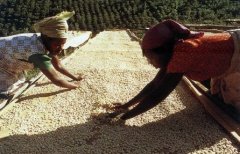
Coffee Technology Fine Coffee Fruit Coffee Bean Processing
There are two ways to prepare coffee beans for the coffee roasting process. The method chosen has a significant impact on the final price and quality of coffee. The cheapest method is called drying, which is used for lower quality coffee beans, while higher quality coffee beans are processed by wet processing. Drying is used on unwashed coffee beans. Wet treatment is used for thoroughly cleaned or semi-cleaned

Kenyan grade coffee bean boutique coffee
Usually, Kenyan coffee is classified as follows: 1) Common categories: coffee fruits picked by hand, picked by hand, picked out immature fruit (unripe), overripe fruit (overripe) and other defects, peeled, after about 36 hours of fermentation, placed on a metal grid for sun drying, in the processing plant to remove the seed shell (parchment) to become a blue-green appearance
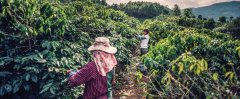
Traditional Kenyan coffee bean processing methods flavor Kenyan Kiambu coffee growers team story
Grower groups such as Ngewa-Komothai help quality-conscious small owners maintain quality and traceability standards while entering the international market

Introduction to the practice of coffee beans in Kenya
Kenyan coffee is mostly grown at an altitude of 1500m, 2100m, and is harvested twice a year. To ensure that only ripe berries are picked, people must tour the forest about seven times. Kenyan coffee is grown by small farmers. After they harvest the coffee, they first send the fresh coffee beans to the cooperative cleaning station, where the washed and dried coffee is covered with parchment beans.

Introduction to the characteristics of Kenyan Jinchu Coffee Flavor Variety with rich taste and beautiful balance
In addition to having obvious and charming fruit acidity, Kenyan coffee is mostly from small coffee farmers, planted in a variety of different environments, encounter different climate and rainfall every year, and bring a variety of distinct and unique personalities. Take the AAPlus grade "KenyaAA+Samburu" as an example, the 2001 Samburu has a strong black plum flavor, low acidity and strong taste, and is new in the winter of 2002.

Kenyan coffee AA grade
Kenyan AA coffee is one of the rare good coffees. It is famous for its rich aroma and balanced acidity and is loved by many foodies. It is perfect and balanced, and has a wonderful and strong flavor, both fresh and not overbearing, is a complete but not heavy taste experience.

Introduction to the characteristics of Kenyan coffee beans in Berman Manor
Kenyan coffee is mostly grown at an altitude of 1500m, 2100m, and is harvested twice a year. To ensure that only ripe berries are picked, people must tour the forest about seven times. Kenyan coffee is grown by small farmers. After they harvest the coffee, they first send the fresh coffee beans to the cooperative cleaning station, where the washed and dried coffee is covered with parchment beans.
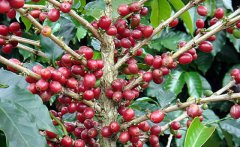
Ivorian boutique coffee
Ivorian boutique coffee has a strict grading system. Generally, raw beans are preserved in parchment coffee beans in the form of endocarp after processing, and the endocarp is removed before export. Go through a strict grading process to ensure the uniformity of quality. And the protection in the process of preservation and transportation is very important, such as temperature and humidity control, ventilation control, avoiding odor adsorption and so on.

Description of Coffee Flavor in Berman Manor, Kenya; introduction to the grindability of fine coffee in producing areas
People in the coffee industry all think that Kenyan coffee is one of its favorite products because Kenyan coffee contains every feeling we want from a good cup of coffee. It has wonderful and satisfying aromas, well-balanced acidity, well-proportioned particles and excellent fruit flavors. The taste is so unique that there is almost no similar coffee. The characteristics of Kenyan coffee
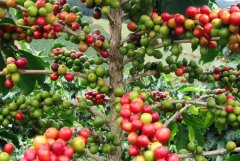
SASINI Manor is located on Mount Kenya.
Boutique coffee has a strict grading system. Generally, raw beans are preserved in parchment coffee beans in the form of endocarp after processing, and the endocarp is removed before export. Go through a strict grading process to ensure the uniformity of quality. And it is very important to preserve the protection in the process of transportation, such as the control of temperature and humidity, the control of ventilation, avoiding odor adsorption and so on.
Technology of high-quality coffee beans the processing process of coffee beans
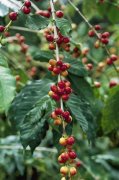
After the wet treatment, the coffee beans are still preserved in the inner pericarp, which still contains about 15% water. The endocarp must be dried to a moisture content of about 11% to ensure that coffee beans are stored in a stable and safe environment. Water content is critical, because if Arabica beans are overdried to a moisture content of 10%, they will be lost

Description of Kenyan Jinchu Coffee Flavor with acidity of Fruit
Kenyan coffee is mostly grown at an altitude of 1500m, 2100m, and is harvested twice a year. To ensure that only ripe berries are picked, people must tour the forest about seven times. Kenyan coffee is grown by small farmers. After they harvest the coffee, they first send the fresh coffee beans to the cooperative cleaning station, where the washed and dried coffee is covered with parchment beans.
Peruvian coffee with Latin American flavor
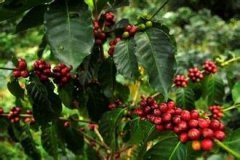
Boutique coffee has a strict grading system. Generally, raw beans are preserved in parchment coffee beans in the form of endocarp after processing, and the endocarp is removed before export. Go through a strict grading process to ensure the uniformity of quality. And it is very important to preserve the protection in the process of transportation, such as the control of temperature and humidity, the control of ventilation, avoiding odor adsorption and so on.
Harvesting and processing of coffee
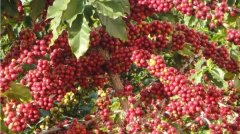
Coffee is the fruit of a Rubiaceae plant growing about 6000 feet above sea level, distributed on the world's narrow subtropical axis; coffee trees grow green all the year round and can grow up to 20 feet tall, and are generally controlled at 8 to 10 feet for easy harvest.

Taste rich and perfect Kenyan coffee flavor description taste grindness treatment Variety characteristics Manor
Kenyan coffee is mostly grown at an altitude of 1500m, 2100m, and is harvested twice a year. To ensure that only ripe berries are picked, people must tour the forest about seven times. Kenyan coffee is grown by small farmers. After they harvest the coffee, they first send the fresh coffee beans to the cooperative cleaning station, where the washed and dried coffee is covered with parchment beans.

Starbucks selected Sumatra Glinchi Coffee Bean Story Sumatran Coffee Flavor and taste
Professional coffee knowledge exchange more information about coffee beans Please follow the coffee workshop (Wechat official account cafe_style) was born in Bufan Glinchi is actually a place name. Mount Kerinci, the highest volcano in Indonesia and the highest peak in Sumatra (3805 m), is located in the southeast of Jambi, Sumatra. Volcanic institute
Nicaraguan boutique coffee coffee net black coffee
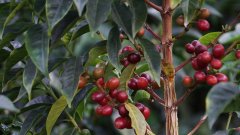
Boutique coffee has a strict grading system. Generally, raw beans are preserved in parchment coffee beans in the form of endocarp after processing, and the endocarp is removed before export. Go through a strict grading process to ensure the quality, especially the coffee harvested in early June. Ecuadorian coffee beans can be divided into two varieties: Galapagos and Gigante, both of which have large grains.